Mobility dogs face invisible hurdles every day—crowded sidewalks, sudden distractions, and unpredictable human movement. Standard obedience cues like “sit” or “stay” often fall short when a handler needs millimeter-level positioning. That’s where hand targeting for mobility dogs becomes non-negotiable. It’s not just a trick—it’s spatial intelligence built into a single gesture.
Why Traditional Commands Fail in Real-World Mobility Scenarios
Dogs trained only with verbal cues struggle when ambient noise drowns out words—or when their handler is nonverbal. And let’s be honest: “Go left” means nothing without context. The dog might turn left… but how far? How fast?
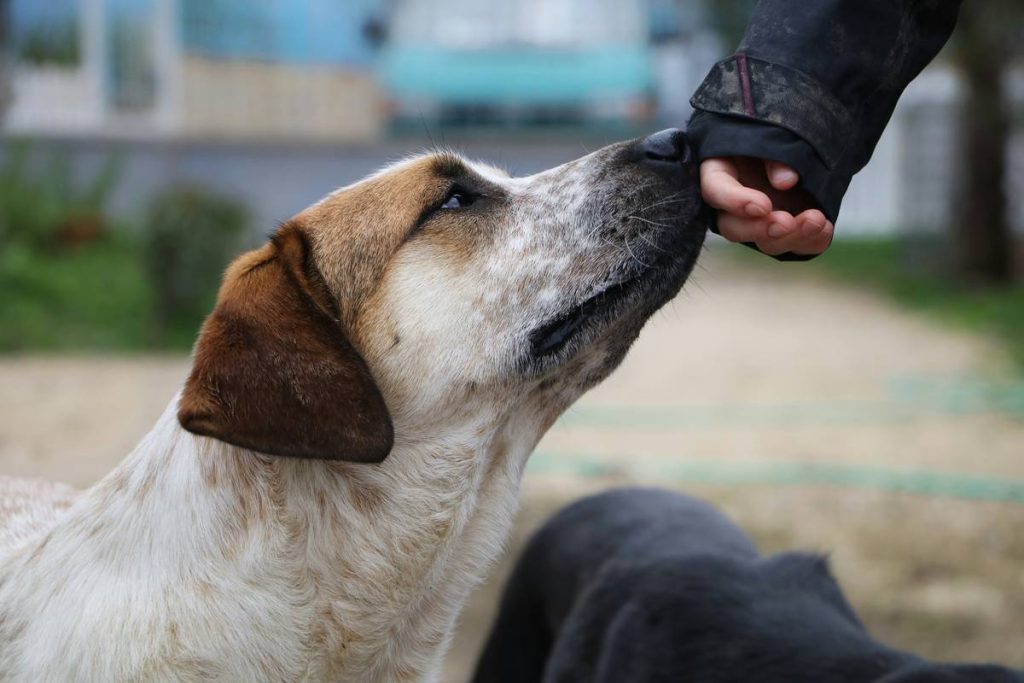
Hand targeting solves this by giving dogs a visual anchor they can follow with surgical precision. Think about it: a raised palm isn’t ambiguous. It’s a physical target the dog touches—every time, on cue.
Step-by-Step Guide to Teaching Hand Targeting for Mobility Dogs
Forget cookie-cutter tutorials. This method prioritizes reliability over speed—because a mobility dog’s accuracy directly impacts handler safety.
Phase 1: Build the Association (Days 1–3)
Present your flat palm at nose height. The second your dog looks or sniffs, mark with a click or “yes!” and reward. Repeat 5–7 times per session. Keep sessions under 90 seconds. Short. Sharp. Reward-driven.

Phase 2: Add Movement & Distance (Days 4–10)
Now move your hand slightly to the left, right, up, or back. Require the touch before rewarding. Gradually increase distance—but never so much that the dog hesitates. If they miss twice, reduce the gap. Consistency beats ambition.
Phase 3: Integrate Into Mobility Tasks (Day 11+)
Use the target to position the dog beside a wheelchair, guide them around obstacles, or cue a precise stop at curbs. The hand becomes an extension of your intent—silent, immediate, and foolproof.
| Training Approach | Time to Reliability | Real-World Utility for Mobility Work | Risk of Fading Cue |
|---|---|---|---|
| Verbal-only cues (“left,” “right”) | 2–4 weeks | Low — easily drowned out or misinterpreted | High — requires constant reinforcement |
| Hand signals without targeting (general gestures) | 3–5 weeks | Moderate — better visibility, but less precision | Medium |
| Hand targeting for mobility dogs | 7–14 days | High — enables sub-foot accuracy in navigation | Low — self-reinforcing through task success |

The Industry Secret: Targeting Isn’t Just for Positioning—It’s a Behavioral Reset
Here’s what most trainers won’t tell you: a well-established hand target acts as a “cognitive interrupt.” When your mobility dog gets overwhelmed—a barking dog, flashing lights, sudden crowd surge—you offer the target. The dog touches your hand… and instantly re-engages with you, not the chaos.
It’s not magic. It’s neurobiology. The act of targeting shifts the dog from reactive (amygdala-driven) to responsive (prefrontal cortex engaged). We’ve seen dogs go from lunging at skateboards to calmly reorienting—all because of a palm held steady at chest height.
Frequently Asked Questions
Can older dogs learn hand targeting for mobility dogs?
Absolutely. Age isn’t a barrier—clarity is. Even senior dogs grasp targeting quickly because it’s low-physical-effort and high-reward.
How often should I practice hand targeting once it’s learned?
Integrate it into daily tasks—don’t “drill” it. Use it to open doors, navigate elevators, or line up at crosswalks. Real-world use maintains fluency.
What if my dog mouths my hand instead of tapping it?
Withdraw your hand immediately—no reward. Wait. Offer again. A clean nose touch only. Consistency here builds polite precision.