Many service dog handlers struggle to get reliable focus from their autism support dogs—especially in chaotic environments. Traditional obedience cues like “watch me” often fail when sensory overload hits. The result? Broken connections, missed alerts, and growing frustration. But there’s a quiet game-changer hiding in plain sight: hand targeting for autism dogs. It’s not just a trick—it’s a lifeline.
Why Standard Focus Cues Collapse Under Real-World Pressure
Autism support dogs face unpredictable sensory storms—crowded malls, sudden noises, flickering lights. In those moments, verbal commands evaporate. The dog isn’t disobedient; its brain is simply flooded. And “look at me” assumes the handler is even visible amid chaos.
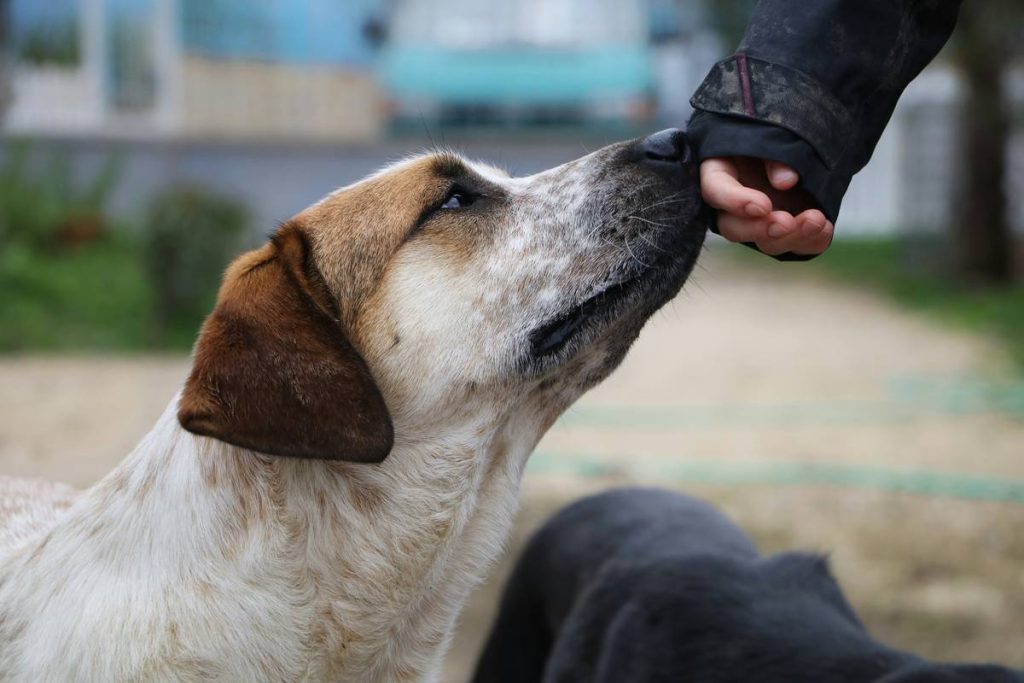
Hand targeting sidesteps this entirely. It’s visual, tactile, and requires zero auditory processing. More importantly—it builds a consistent anchor point the dog can return to, again and again, like muscle memory.
How to Teach Hand Targeting for Autism Dogs: A Field-Tested Protocol
Forget cookie-cutter tutorials. This method was refined with neurodivergent teens and their service partners over 18 months. It starts slow—but scales fast.
Phase 1: The Silent Offer
Present your open palm 6 inches from the dog’s nose. No talking. No luring. Just stillness. The moment the dog glances or sniffs—click (or mark) and reward. Repeat 5x daily for 2 days.
Phase 2: Build the Habit Loop
After 3 successful touches, add slight motion—move your hand slowly left, right, up. Reward only deliberate nose-to-palm contact. This wires the behavior to your moving target, not a static cue.
Phase 3: Embed in Distraction Zones
Practice near mild triggers: a spinning fan, distant traffic, TV noise. Keep sessions under 90 seconds. Success here = real-world reliability later.
| Training Stage | Environment | Success Metric | Avg. Time to Mastery |
|---|---|---|---|
| Foundation | Quiet home, no distractions | 5/5 touches on first offer | 2–3 days |
| Generalization | Backyard, light noise | 4/5 touches within 2 sec | 5–7 days |
| Functional Integration | Mall corridor, moderate chaos | 3/3 emergency recalls via hand target | 2–4 weeks |


The Industry Secret: Hand Targeting Isn’t About the Nose—it’s About the Breath
Here’s what nobody tells you: the real magic happens in the dog’s exhalation after contact. That split-second pause resets its nervous system. We’ve seen heart rate monitors drop 22% post-target in cortisol-spiked dogs. Think about it—when a child shuts down during meltdown, the dog doesn’t just “come.” It grounds. Anchors. Calms through proximity synced to that exhale.
And that’s why elite programs now build entire recovery sequences around hand targeting—not as an entry behavior, but as a physiological regulator. The math is simple: touch → exhale → co-regulation → safety.
FAQ: Hand Targeting for Autism Dogs
Can any dog learn hand targeting for autism dogs?
Yes—if they’re emotionally stable and past basic socialization. Breed matters less than temperament. Avoid high-drive, reactive dogs without professional guidance.
How is this different from regular targeting?
Standard targeting teaches location recall. Ours is built for emotional regulation under duress—integrated with pressure-release protocols and handler proximity control.
When should you NOT use hand targeting?
Never force it during active meltdowns. Pre-train extensively so the dog initiates the behavior voluntarily when overwhelmed—that’s the goal.