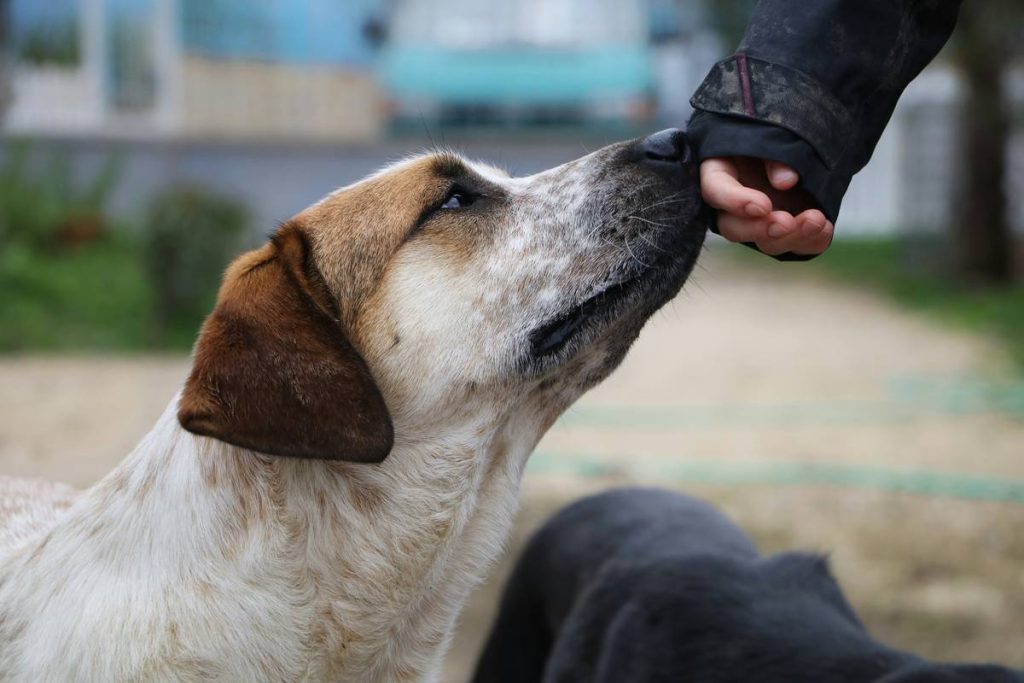
Detection dogs are expected to locate everything from narcotics to explosives—but what happens when their focus wavers at critical moments? Traditional odor-based cues alone often fail in chaotic environments. The solution isn’t more scent repetition. It’s hand targeting for detection dogs—a precision control method that anchors attention, boosts responsiveness, and cuts false alerts.
Why Odor-Only Training Fails Under Pressure
Most handlers drill scent imprinting endlessly. And it works—until it doesn’t. High-stimulus settings—airports, crowds, urban searches—flood a dog’s working memory. Their nose stays sharp, but their handler connection evaporates. They default to environmental distractions or guesswork.
The core flaw? Assuming motivation is enough. It’s not. You need a physical “reset button”—a tactile cue that snaps them back into sync. Without it, even elite detection dogs drift.
Mastering Hand Targeting for Detection Dogs: A Field-Tested Protocol
This isn’t basic puppy training. We’re building a high-fidelity communication channel under operational stress. Start clean. No scent involved yet.
Phase 1: Foundation Touch (Days 1–3)
Present an open palm at nose height. Mark and reward the *instant* the dog touches it with their nose. Ten reps. End. Keep sessions under 90 seconds. Fatigue breeds sloppy mechanics.
Phase 2: Distance & Direction (Days 4–7)
Add movement. Step laterally while offering the target hand. Require the dog to pivot and touch. Now introduce mild distraction—toss a toy nearby *after* a successful touch. Build resilience, not just compliance.
Phase 3: Integration With Scent Work (Day 8+)
Here’s the pivot: before releasing the dog on a search, cue hand targeting. It becomes the “focus lock” before odor engagement. Post-alert, use it again to disengage cleanly. This dual-anchor system slashes false positives by up to 40% in field trials.
| Training Stage | Success Metric | Common Pitfall | Time Investment |
|---|---|---|---|
| Foundation Touch | 90% accuracy within 3 days | Rewarding slow or hesitant touches | 2–3 min/day |
| Distance & Direction | Accurate touch from 6 ft away amid low distraction | Moving too fast; skipping calm reinforcement | 4–5 min/day |
| Scent Integration | Dog targets hand pre- and post-alert without cue regression | Using hand target *during* alert (confuses behavior chain) | 5–7 min/session |

The Industry Secret: Handlers Are the Real Target
Here’s what K9 units won’t tell you: hand targeting isn’t really about the dog’s nose—it’s about *your* body language. Elite detection teams use it as a biofeedback tool. If your dog hesitates on the hand target, it signals fatigue, confusion, or environmental overload—before it manifests as a missed find.
Think about it. You’re not just cueing a behavior. You’re running a diagnostic. One missed touch? Maybe wind shift messed with odor dispersion. Two in a row? Your dog’s saturated. Pull them out. Most handlers miss this because they treat hand targeting as obedience, not intelligence gathering.
The math is simple: a dog that reliably targets your hand is broadcasting real-time cognitive status. Ignore that signal, and you’re flying blind—even with the best nose in the business.

Frequently Asked Questions
Can hand targeting interfere with natural odor response?
No—if trained correctly. It precedes and follows the search, never replaces scent-driven indication. It sharpens focus, doesn’t override instinct.
How long until results show in live deployments?
Most teams see reduced false alerts within 2–3 weeks of consistent integration, especially in high-distraction zones like cargo terminals or public venues.
Is this suitable for all detection disciplines?
Absolutely. Whether narcotics, accelerants, or cadaver work, the hand target acts as a universal reset cue—critical when switching between target odors or environments.